
Composite Decking in UK Winters: Slip Ratings & Maintenance
UK winters bring heavy rain, frost, and damp conditions that turn many timber garden decks into slip hazard zones. A common concern before buying is whether composite decking suffers from the same slippery surface issues when frost hits, or if sub-zero temperatures cause the boards to crack.
Understanding how composite decking in winter compares to traditional wood, how slip ratings work, and what simple steps keep your deck safe will help you get the most out of your installation all year round.
TL;DR
- Winter Durability: Composite decking does not absorb water, meaning it won’t rot, split, or warp in frost as timber does.
- Slip Resistance: Look for boards with a Pendulum Test Value (PTV) of 36+ or an R11/R12 rating for safe foot traction when wet.
- Winter Care: Prevent slick surfaces by sweeping leaves regularly and clearing snow with a plastic shovel (never metal).
- Spring Cleanup: A quick wash with warm, soapy water and a soft brush easily restores your deck after winter ends.
Content
- How Does Composite Decking Hold Up in Cold Weather?
- Understanding Decking Slip Ratings: PTV and R-Values
- Composite vs Wood Decking Winter Maintenance Comparison
- How to Stop Decking Being Slippery in Winter
- How to Clean Composite Decking After Winter
- Frequently Asked Questions (FAQs)
- Winter-Proof Your Garden with Beatsons
How Does Composite Decking Hold Up in Cold Weather?
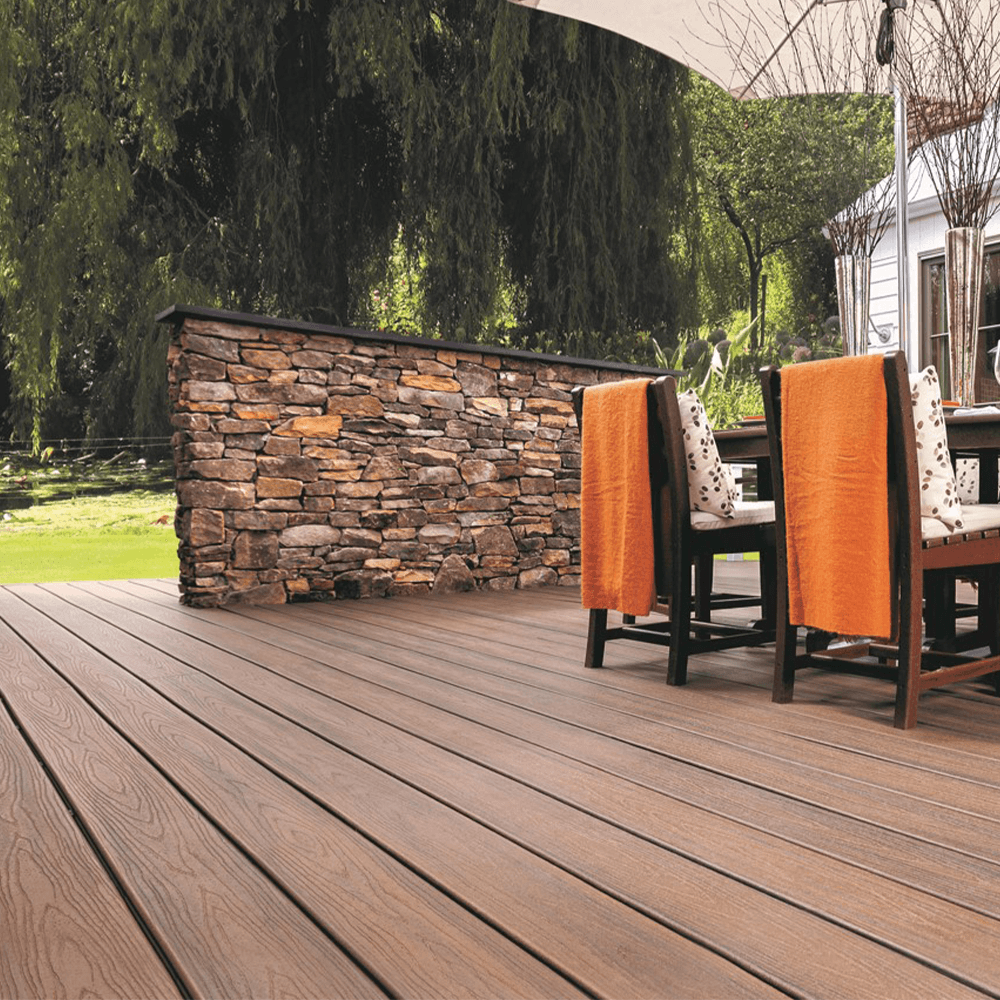
Composite decking holds up exceptionally well in UK cold weather because its blend of recycled wood fibres and plastic resists moisture absorption. Unlike traditional timber, composite boards do not absorb heavy rainfall or freeze internally, preventing cracking, warping, and rot. While frost can still create a thin surface layer of ice, the structural integrity of composite remains uncompromised even through freezing UK winters.
Traditional timber acts like a sponge in wet weather. Water soaks deep into the wood grain, freezes when temperatures drop, and expands. Over a few seasons, this freeze-thaw cycle leads to split boards, loose fixings, and structural rot.
Composite boards solve this issue through their material makeup:
- High Moisture Resistance: The high-density polyethene (HDPE) or polymer encasement prevents water from soaking into the core.
- Dimensional Stability: Composite boards expand and contract far less than solid wood. They also use controlled expansion & contraction clips to keep board gaps even and secure.
- No Splintering: Freezing conditions will not cause composite boards to flake or splinter underfoot.
So, is composite decking winter-proof or does it need special care? While the boards themselves are structurally immune to rot and frost damage, surface ice and organic matter can still settle on top. Basic maintenance is still required to keep the surface safe to walk on.
Understanding Decking Slip Ratings: PTV and R-Values
A slip rating measures the friction and grip offered by a flooring surface under wet or dry conditions. In the UK, safety standards use Pendulum Test Value (PTV) and R-ratings (such as R11 or R12). A PTV score of 36 or higher indicates a low slip potential, proving that high-quality composite boards remain grippy even when wet or frost-covered.
One of the biggest concerns for homeowners is whether composite decking is slippery when wet. The answer largely depends on the board’s surface finish and its official slip rating.
When checking product specifications, look for two main testing standards:
1. Pendulum Test Value (PTV)
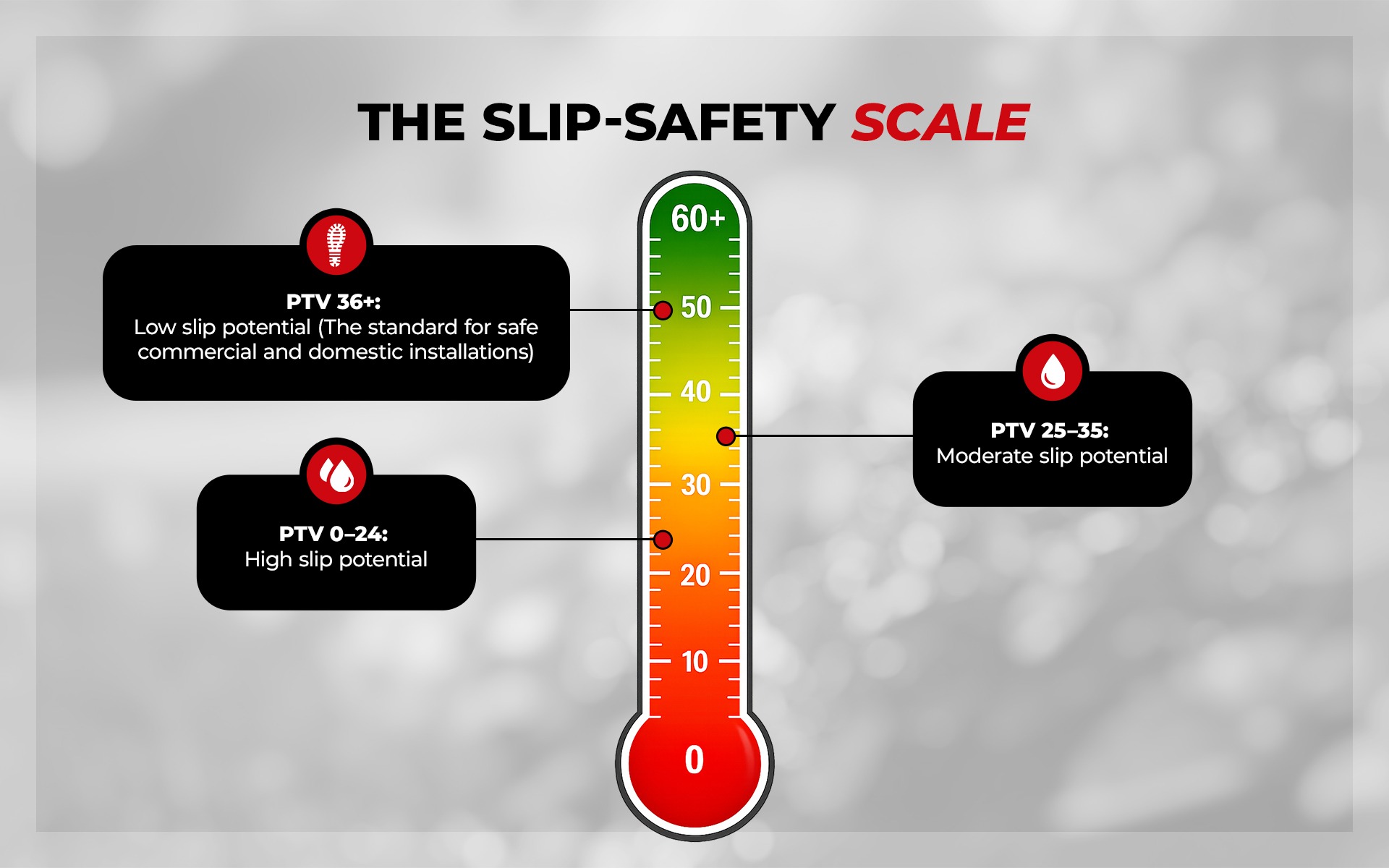
The Pendulum Test (BS 7976-2) mimics a heel striking a wet surface.
- PTV 0–24: High slip potential
- PTV 25–35: Moderate slip potential
- PTV 36+: Low slip potential (The standard for safe commercial and domestic installations)
2. Ramp Test Ratings (R-Ratings)
Based on DIN 51130 (a German standard used to test and classify the slip resistance of floor coverings), surfaces are tested on an inclined ramp coated with oil/water.
- R10: Suitable for dry or occasionally damp areas.
- R11 & R12: High friction rating, ideal for wet UK garden environments.
Quality composite decking features deep embossed woodgrain patterns or anti-slip grooves. These channels allow surface water to drain off rather than pooling into slick patches. While composite decking does not absorb water, a thin layer of surface algae can form in damp shaded areas to make it slippery. Fortunately, it can be easily scrubbed away with warm soapy water and a brush to quickly restore its traction and appearance.
Composite vs Wood Decking Winter Maintenance Comparison
When comparing composite and wood decking for the winter, composite comes out ahead in maintenance and durability. Timber requires regular sealing, anti-slip coatings, and intense scrubbing to stop algae growth. Composite boards only require basic sweeping to clear leaves and a quick rinse, drastically reducing the effort needed to prevent winter slips.
| Feature | Timber Decking | Composite Decking |
| Water Absorption | High (soaks up water and swells) | Extremely Low (repels water) |
| Algae Growth | High (grows inside moist wood grain) | Low (surface layer only; easily swept off) |
| Winter Sealing Needed? | Yes (annual staining or oiling required) | No (never needs sealing or painting) |
| Resistance to Frost Damage | Poor (prone to splitting and rot) | Excellent (unaffected by freeze-thaw cycles) |
| Maintenance Effort | Heavy (pressure washing, sanding, treatment) | Minimal (occasional sweeping and soapy water) |
How to Stop Decking Being Slippery in Winter
Even slip-resistant surfaces get slick if a layer of wet leaves or ice settles over them. Follow these practical steps to keep your walk areas safe:
- Clear Fallen Leaves Regularly: Wet leaves trap moisture and decay into a slippery film. Use a soft-bristled broom to sweep them away weekly.
- Clear Drainage Channels: Ensure the gaps between your decking boards stay free of dirt and debris so meltwater drains away quickly.
- Use the Right Ice Melt: You can use rock salt or calcium chloride to melt ice on composite boards. Calcium chloride is preferred as it melts ice faster at lower temperatures and leaves less residue behind.
- Avoid Metal Shovels: If clearing heavy snow, use a plastic shovel or a stiff broom. Metal blades can scratch the protective outer casing of capped composite boards.
How to Clean Composite Decking After Winter
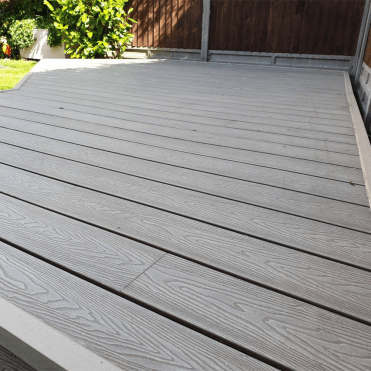
Knowing how to clean composite decking after winter ensures your garden stays in top condition for spring. Start by sweeping away leftover twigs and soil. Wash the boards with warm water, mild dish soap, and a soft-bristle brush, scrubbing along the grain. Rinse thoroughly with a hose. Avoid high-pressure jet washes up close to prevent surface damage.
Routine composite decking maintenance requires very little effort once the cold season passes. Here is a quick 3-step cleanup guide:
- Step 1: Dry Sweep: Sweep off grit, salt remnants, and loose dirt built up over winter.
- Step 2: Soap & Scrub: Mix warm water with a mild household detergent. Scrub along the length of the boards with a soft-bristle brush to lift embedded dirt.
- Step 3: Hose Rinse: Rinse the surface thoroughly with clean water from a garden hose.
Beatsons Top Tip: Pressure washers can be used on low-pressure settings (under 1500 PSI) with a fan tip held at least 30cm away from the surface, but simple soap and water is usually all that is needed.
Frequently Asked Questions (FAQs)
Is composite decking winter-proof or does it need special care?
Composite decking is engineered to withstand freezing temperatures, snow, and rain without rotting, cracking, or warping. However, it still requires minimal care, such as sweeping away wet leaves, to prevent a slippery layer of surface grime from building up during winter.
Can you use salt or de-icer on composite decking?
Yes, you can use rock salt or calcium chloride to melt ice on composite boards. Calcium chloride is recommended as it is less abrasive. Always sweep away residual salt and rinse the boards with water once the freeze has passed to prevent white residue marks.
Will a metal shovel damage composite boards when clearing snow?
Yes, metal-edged shovels can scratch or gouge the surface capping of composite boards. Always use a plastic shovel or a soft broom to clear snow and slush safely.
Winter-Proof Your Garden with Beatsons
Upgrading to high-quality composite decking means you can step outside safely right through the wet British winter without worrying about rotten timber or slick, algae-covered boards. At Beatson’s, we stock a wide selection of durable, anti-slip composite decking boards you need to get the job done right. Pop into your local branch to see our ranges in person, or browse the full collection online today. If you have any questions about slip ratings or need help working out quantities for your project, give us a call or pop in for a chat; our team is always on hand to help.
Read Next
A Beginner’s Guide on How to Build a Decking
Choosing Between Composite and Timber Decking: Key Questions Answered
How to Build a Garden Wall in 7 Easy Steps
Comments are closed here.