
A Beginner’s Guide on How to Build Decking: Step-by-Step Instructions
Building a deck from scratch might seem like a daunting task reserved for professional tradespeople. However, with a bit of planning and the right materials, tackling this project yourself is entirely achievable and incredibly rewarding.
If you are an aspiring home improver feeling a little intimidated by the scale of the job, you are in the right place. We will walk you through the entire process, breaking down complex instructions into simple, manageable steps to help you build with confidence.
TL;DR:
- Plan thoroughly: Sketch your design, check local building regulations, and measure your garden carefully before buying supplies.
- Build a solid foundation: Learning how to build a decking frame correctly is the most important step for a safe, long-lasting structure.
- Space your boards: Always leave a 5 mm to 8 mm gap between decking boards to allow for water drainage and natural timber expansion.
- Use the right tools: Invest in quality pressure-treated timber, rust-proof screws, and essential hand tools to make the job much easier.
Content
Designing and Planning Your Deck
Planning your deck involves sketching a detailed layout, accurately measuring your garden, and choosing the right location for sunlight. You must also check local UK building regulations to see if planning permission is required, especially if the deck is elevated above 30cm or covers over half your garden.
Before picking up a saw, grab a pencil. A clear plan saves time, money, and stress. Start by drawing a simple sketch of your garden. Mark where the sun hits at different times of the day to find the best spot for entertaining or relaxing.
Next, decide on the size and shape. Keep it simple if this is your first project. A classic square or rectangular design is perfect for beginners. Once you have a rough idea, measure the area meticulously. This will help you calculate exactly how much timber and how many screws you need.
Pro Tip: Use string and wooden stakes to mark out the exact footprint of your deck on the grass. This gives you a real feel for the size and helps you spot any tricky uneven ground before you begin.
Tools and Materials Checklist
To build a deck, you will need pressure-treated timber for the frame, decking boards for the surface, and rust-resistant decking screws. Essential tools include a tape measure, spirit level, circular saw, drill, and safety goggles to ensure accurate cuts and secure assembly.
Getting everything ready before you start prevents frustrating mid-project trips to the shop. Here is a simple checklist of what you need, all of which you can find in our building supplies and garden landscaping departments.
Materials:
- Timber for the frame: High-quality, pressure-treated joists and supports.
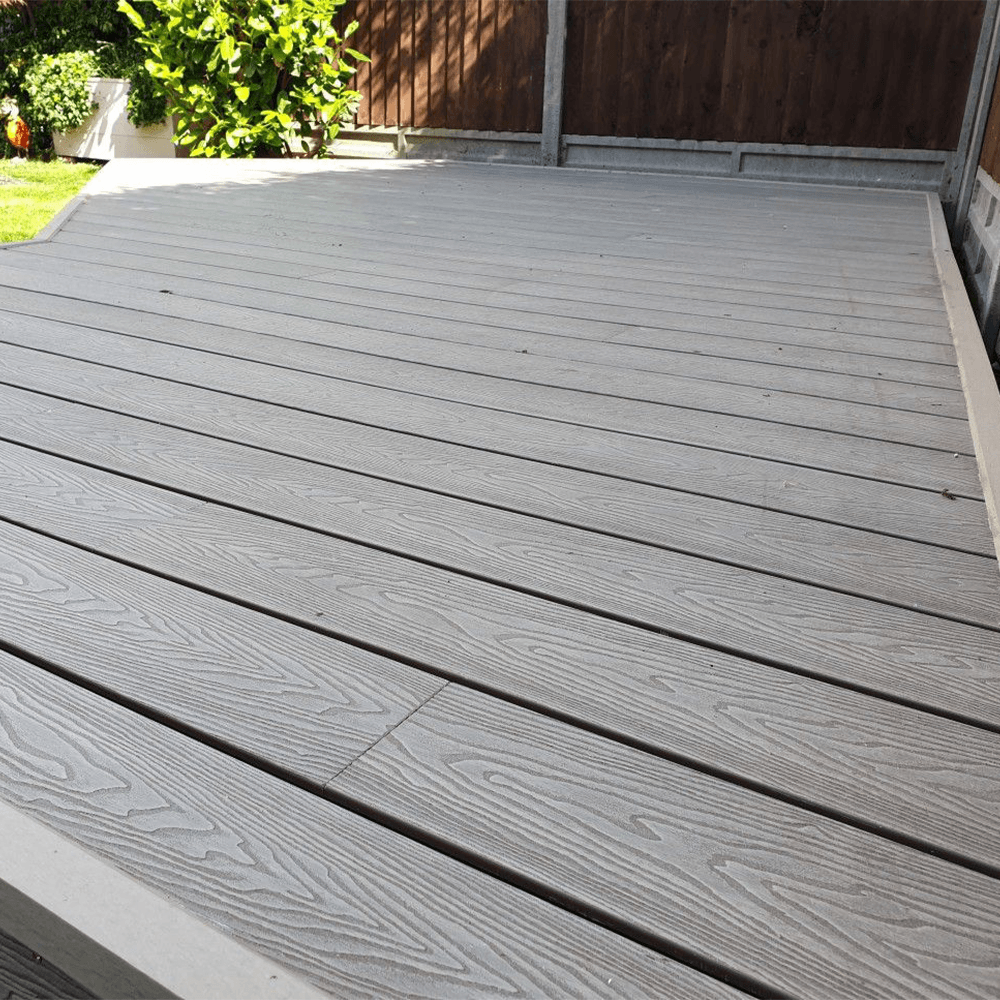
- Decking boards: Choose from traditional timber boards or low-maintenance Composite Decking.
- Fixings: Galvanised or stainless steel decking screws and metal joist hangers.
- Foundation: Concrete blocks, gravel, and weed-resistant landscape fabric.
Essential Tools:
- Tape measure and pencil
- Spirit level
- Combi drill and driver bits
- Circular saw or handsaw
- A spade for digging
Pro Tip: Safety first! Always wear safety goggles and a dust mask when cutting timber, and use sturdy gloves when handling rough wood or concrete blocks.
Step-by-Step Construction Guide
Building a deck involves four main stages: preparing the ground, constructing a level frame, securing the surface boards, and adding finishing touches. By following a logical, step-by-step process, beginners can safely build a sturdy, professional-looking structure from the ground up.
Let’s break down the build into bite-sized pieces. Remember to take your time and double-check your measurements as you go.
1. Preparing the Ground and Foundation
A sturdy deck needs a solid base. Clear the marked area of grass, rocks, and weeds. Dig down about 15cm (6 inches) to create a flat, even surface.
Lay down a heavy-duty weed membrane to stop unwanted plants from sprouting up through your beautifully finished boards. Cover the membrane with a layer of gravel. For the foundation, you can place concrete blocks evenly across the area or use adjustable risers, making sure they sit perfectly level.
2. How to Build a Decking Frame
This is the most critical part of figuring out how to build a decking frame. The timber base supports everything above it. Raised decking will require stamped framing joists such as regularised & treated C16 or C24 timber as a minimum standard under Building Regulations.
- Build the outer box: Cut your pressure-treated timber to size, then screw the four outer edges together to form a large rectangle.
- Add the internal joists: Space them evenly inside the outer frame. A standard spacing is usually 400mm apart, but check the manufacturer’s guidelines if you are using composite boards.
- Secure with hangers: Use metal joist hangers and galvanised screws to attach the internal joists firmly to the outer frame. Check the entire structure with your spirit level.
Pro Tip: To ensure your frame is perfectly square, use the 3-4-5 rule. Measure 3 feet down one side, 4 feet down the adjacent side, and the diagonal distance between those two points should be exactly 5 feet. Also, remember to apply end coat to seal any cuts to maintain structural integrity and preserve aesthetic properties.
3. Deck Board Installation
With the hard work of the frame complete, it is time to see your project take shape.
- Start at the edge: Lay your first board flush with the outer edge of your frame. Secure it with two decking screws at every point it crosses a joist.
- Maintain a gap: Never push the boards tightly together. Wood naturally expands and contracts with the great British weather. Leave a 5 mm to 8 mm gap between each board for drainage and airflow.
- Work your way across: Continue laying the boards one by one, using an offcut of wood or a spacer tool to maintain a consistent gap.
4. Finishing Touches
Once all the boards are screwed down, use your circular saw to trim any overhanging edges neatly in one straight line. Use sandpaper to smooth off any rough or splintered ends. For composite decking, you can use L trim for a premium finish.
Depending on the height of your project, you might want to build stairs with stringers or a protective handrail. Finally, apply a high-quality wood stain or protective oil to seal the timber against rain and UV rays.

Common Mistakes to Avoid
The most common deck-building mistakes include failing to leave expansion gaps between boards, building on uneven foundations, and using the wrong screws. Using non-galvanised screws will quickly cause rust, which will eventually rot the surrounding timber and compromise the safety of the entire structure.
Even the most enthusiastic home improvers can slip up. Watch out for these frequent beginner errors:
- Forgetting the gap: As mentioned, putting boards flush against each other can cause warping and water pooling. Composite decking solves this issue with fixing clips that allow for controlled expansion and contraction from heat and moisture changes.
- Rushing the frame: If your foundation is wobbly or out of square, your finished surface will be too. Take an extra hour to get the base perfectly level.
- Using standard indoor screws: Always use screws specifically designed for decking use. Standard screws will quickly rust and snap under pressure. For timber decking screws: TIMco Solo Decking Exterior Screws Organic Green (Box of 200), for composite decking screws: Buy Composite Fixing Screws (Pack of 100) | Beatsons
Frequently Asked Questions (FAQs)
Do I need planning permission for a deck?
In the UK, you generally do not need planning permission if the deck is no higher than 30cm above the original ground level and does not cover more than 50% of your total garden area. Always check with your local authority if you are unsure or live in a conservation area.
What is the best wood for a beginner to use?
Softwood timber, such as pressure-treated pine, is excellent for beginners. It is easy to cut, cost-effective, and readily available. If you want something low-maintenance that requires zero staining, composite decking is a fantastic, straightforward alternative.
How long does it take to build?
Two people can usually complete a simple, ground-level deck over a single weekend. Give yourself a full day for planning and foundation work, and another day to construct the frame and lay the boards.
Decking Supplies at Beatson’s
Learning how to build decking is a highly rewarding project that any motivated beginner can accomplish. By taking your time with the planning phase, carefully constructing a level frame, and using high-quality materials, you will create a beautiful, lasting addition to your garden. Ready to get started? Browse our full range of Decking Supplies at Beatson’s today and find everything you need to bring your project to life.
If you require more information, pop into your local Beatson’s branch and speak to one of our decking experts.
Read Next
Choosing Between Composite and Timber Decking: Key Questions Answered
How to Keep Decking Slip-Free Throughout Winter
How to Build a Garden Wall in 7 Easy Steps
Comments are closed here.