
Decking vs Paving: Which Is Right for Your Garden?
Deciding between a wooden or composite deck and a paved patio comes down to budget, site topography, and how much ongoing maintenance you are willing to do. Both options create practical, long-lasting surfaces, but they perform very differently over a ten-, twenty-, or thirty-year period.
TL;DR
- Decking is faster and cheaper to install on sloped or uneven ground because it avoids heavy soil excavation.
- Paving requires heavier sub-base preparation upfront, but rewards you with decades of durability and minimal structural upkeep.
- Composite decking vs paving: Capped composite boards and porcelain paving sit in a similar premium price bracket, delivering high slip resistance and modern finishes.
- Drainage: Decking lets rainwater drain naturally through board gaps, whereas paving requires a deliberate fall and planned drainage channels.
Content
- Decking vs Paving: A Direct Comparison
- Decking vs Paving Cost: Upfront Budgets and Long-Term Value
- Sloped Gardens: Elevated Decking vs Ground Levelling
- Evaluating Durability, Pests, and Single-Unit Repairs
- Maintenance, Slip Resistance, and Garden Drainage
- Property Value and Small Garden Layouts
- Frequently Asked Questions (FAQs)
- Get the Right Materials for Your Project at Beatson’s
Decking vs Paving: A Direct Comparison
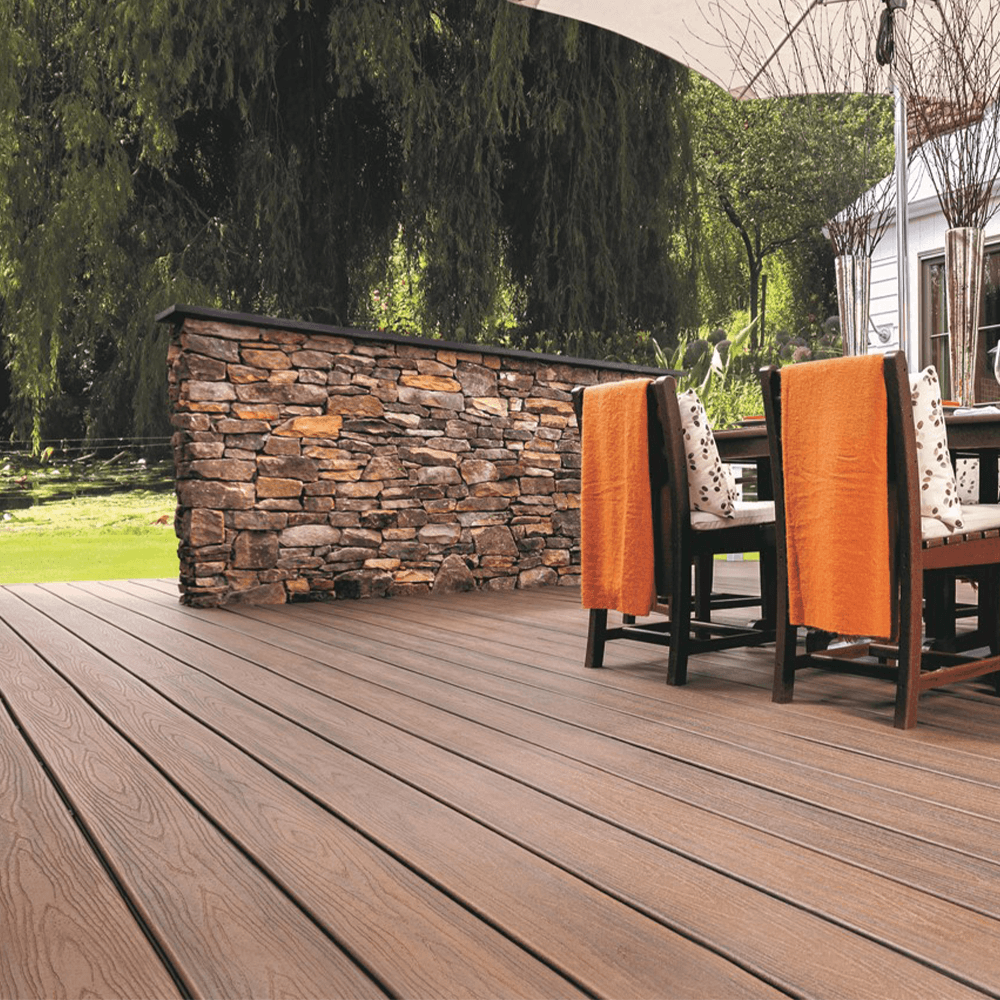
Deciding on decking or paving depends on your plot layout and maintenance preferences. Decking suits quick installs and sloped ground because timber or composite joists avoid heavy earthworks. Paving provides longer lifespans, superior scratch resistance against pets, and no risk of decay. While softwood timber decking offers the lowest upfront price, porcelain and stone paving sit at comparable premium price points.
| Feature | Pressure-Treated Softwood | Composite Decking | Natural Stone Paving | Porcelain Paving |
| Average Lifespan | 10 to 15 years | 25+ years | 20 to 30+ years | 30+ years |
| Maintenance Level | High (clean, stain/seal) | Low (routine wash) | Medium (weeding, wash) | Low (simple wash) |
| Scratch Resistance | Moderate | High | High | Exceptional |
| Best Suitable Site | Budget DIY, steep slopes | Low-maintenance modern garden | Traditional patios, heavy use | Modern finishes, high durability |
Decking vs Paving Cost: Upfront Budgets and Long-Term Value
The initial decking vs paving cost depends heavily on ground clearance and materials. Softwood timber decking remains the cheapest option upfront for DIYers, requiring fewer heavy materials. Paving needs deeper excavation, compacted aggregate, and mortar beds, increasing initial material and tool hire expenses. However, premium composite decking vs paving in porcelain usually balances out to a similar overall investment once installed.
Is it cheaper to build a deck or lay a patio DIY?
If you are taking on the job yourself, softwood timber decking is usually the most budget-friendly option. Constructing a basic timber sub-frame uses fewer tonnes of raw aggregate than digging out and compacting a proper sub-base for stone paving slabs.
Paving requires substantial ground prep: excavating soil down roughly 150mm, laying and compacting MOT Type 1 hardcore, and laying slabs on a full mortar bed. The sheer weight of raw materials and machinery hire (like a wacker plate or cement mixer) makes a DIY patio more expensive to start with.
When looking at composite decking vs paving, the numbers shift. Capped composite boards often cost about the same per square meter as quality porcelain paving. Even though composite decks are easier to frame over uneven ground, your upfront material costs will be similar to building a stone patio.
Sloped Gardens: Elevated Decking vs Ground Levelling
Tackling a sloping garden highlights the core structural differences between decking or paving. Elevated decking solves steep incline issues by sitting on posts and concrete footings, bridging uneven ground with minimal soil removal. Paving a sloped plot requires major excavation, retaining wall construction, and infill compaction, significantly driving up labour, material volume, and project timelines.
- Elevated Decking Layout: Decking boards sit on a joist frame supported by timber or steel posts anchored into concrete footings. Ground excavation is kept to an absolute minimum.
- Paved Patio Layout: Paving slabs sit on a mortar bed over compacted MOT Type 1 aggregate. Slopes require retaining walls and massive infill to build up a level platform, needing extensive soil extraction.
Installing Decking on a Slope
Decking comes into its own on uneven or sloping plots. Instead of digging out tonnes of earth, you set timber or steel posts into concrete footings at varying heights. A level joist network builds directly off those posts, bridging sharp drops without hassle. That makes elevated timber or composite decking the most straightforward way to build a level seating platform across a steep incline.
Levelling Ground for a Patio
Laying a patio on a slope demands serious structural work. You have to excavate the top portion of the bank and build retaining walls along the lower edge to contain the sub-base. The gap behind the wall must then be filled with compacted hardcore before you can even think about mixing mortar and setting slabs. That adds considerable material tonnage, structural considerations, and physical labour to the job.
Evaluating Durability, Pests, and Single-Unit Repairs
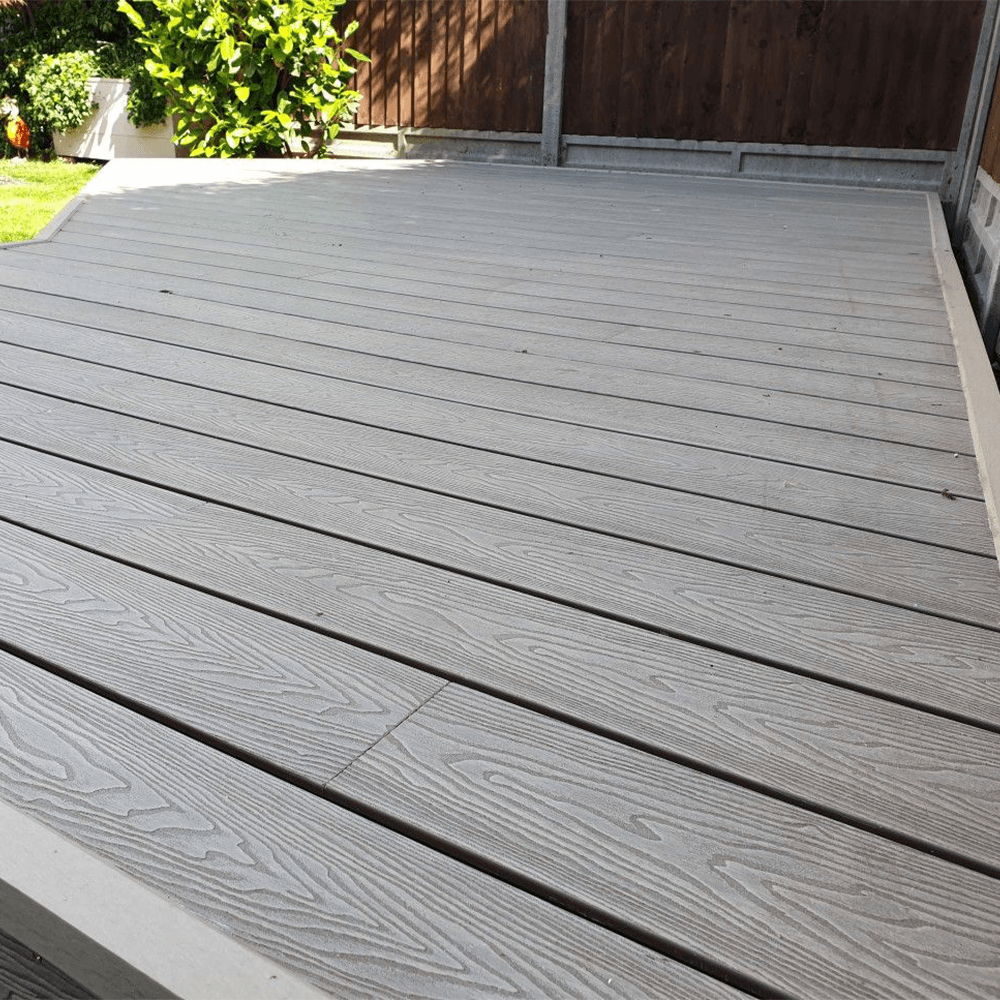
Assessing the pros and cons of decking vs paving for a garden means looking at how each surface handles daily wear and tear and garden wildlife. Paving offers total immunity to rot, high scratch resistance for pets, and simple spot repairs for individual broken slabs. Timber decking can suffer from softwood scratches, rot, or damp-loving insects, though damaged individual boards are quick to unscrew and replace.
Pet-Friendly Garden Surfaces: Scratch Resistance
If you have energetic dogs, claw abrasion is something to keep in mind. Softwood timber boards can mark over time, especially if pine is left unsealed. Porcelain paving is vitrified at intense heat, making it nearly impossible to scratch, stain, or damage with pet claws. Composite decking capped with a solid polymer layer also holds up exceptionally well against claws while remaining comfortable underfoot without any risk of splinters.
Common Pest Issues: Wooden Decking vs Paving Slabs
- Wooden Decking: Timber framing built low to the ground can trap moisture and create dark cavities that attract garden pests if airflow is restricted. Untreated frame timber can also suffer rot or beetle damage over time if damp-proof membranes are skipped.
- Paving Slabs: Paving completely avoids timber rot, but traditional sand-and-cement mortar joints can attract ant colonies looking to nest. Ants dig out loose bedding sand, causing slabs to rock or dip over time. Using modern resin-based jointing compounds stops this in its tracks by sealing the gaps between pavers with an insect-proof barrier.
How to Repair a Single Damaged Paver vs a Deck Board
- Replacing a Deck Board: If a single deck board cracks or warps, fixing it is straightforward. You unscrew the board from the underlying joists, trim a fresh board to size, fix it down, and apply stain or treatment to match the rest of the deck.
- Replacing a Cracked Paver: Replacing a single cracked paver takes a bit more effort. You need to carefully chisel out the jointing compound or mortar around the slab without chipping the surrounding stones. Once the damaged piece is lifted out, you must break up the old mortar bed, lay fresh bedding compound, and set the new paver flush with the existing patio level.
Maintenance, Slip Resistance, and Garden Drainage
Long-term upkeep varies widely across both surface types. Wood decking needs annual cleaning, algaecide treatments, and oiling to prevent damp algae build-up. Composite decking and porcelain paving need little more than a sweep and an occasional wash. In terms of drainage, decking lets rainwater filter naturally through board gaps, while non-porous paving relies on shallow falls and channel drainage to direct water safely away from buildings.
Is Decking Maintenance Harder Than Paving?
Timber decking requires regular effort to keep it looking good and safe underfoot. Softwood needs a thorough scrub, an algae remover, and a fresh coat of protective stain or deck oil every spring. Left uncared for, damp shade encourages algae growth, making wet wood slick.
Composite decking and porcelain paving cut that maintenance right down. Neither needs sealing, painting, or oiling. A simple scrub with warm water, mild detergent, and a soft broom keeps them looking clean year-round.
Slip Resistance of Wet Composite Decking vs Porcelain Paving
- Composite Decking: Capped composite decking features textured woodgrain patterns or grooves designed to channel standing water away, achieving solid anti-slip performance in rainy weather.
- Porcelain Paving: Outdoor porcelain paving is intentionally manufactured with a textured finish, offering firm grip underfoot even during heavy downpours.
How Does Decking vs Paving Affect Garden Drainage?
Decking is naturally free-draining. Rainwater simply slips between the uniform gaps left between each board, soaking down into the gravel or soil beneath.
Paving creates a solid, sealed surface. Water cannot pass through natural stone or porcelain tiles, so patios must be installed with a subtle gradient to shed water away from house walls. For larger paved areas, incorporating channel drains linked to a soakaway helps manage runoff effectively and meets building standards.
Property Value and Small Garden Layouts
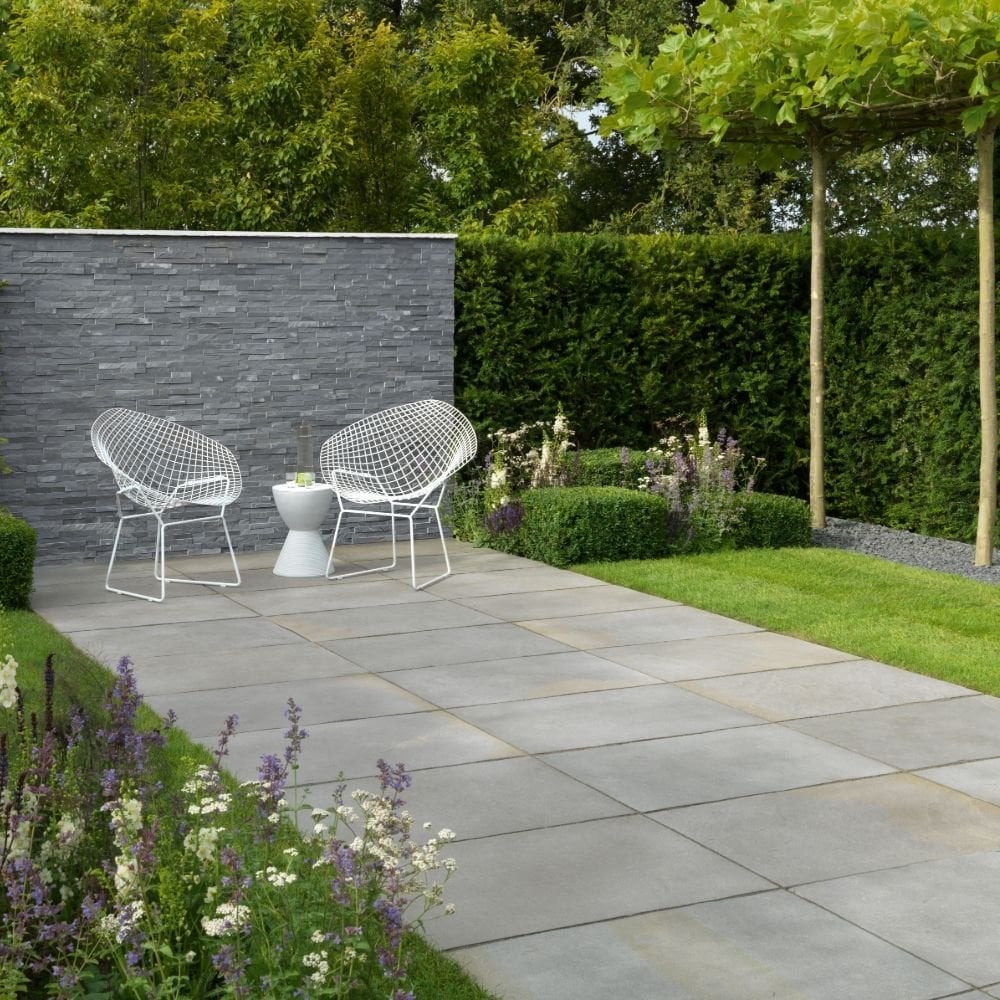
Both options add clear practical value to your home, but longevity influences how buyers view them. When it comes to property value, deciding between a patio and a deck ultimately comes down to material quality. A stone or porcelain patio is seen as a permanent, low-maintenance feature.
Difference Between Patio and Deck for Property Value
A well-laid patio using natural stone or porcelain feels like a permanent extension of your living space. Buyers recognise that a stone patio will likely look just as good a decade down the line with minimal effort. Wooden decking, if neglected, can quickly look weathered or feel springy underfoot, which buyers might see as an upcoming repair bill. Premium composite decking with multi-year warranties avoids this issue, offering the structure of a deck with the longevity buyers want.
Space-Saving Ideas for Small Gardens
- Flush Thresholds with Decking: In compact urban plots, choosing low-profile composite decking installed on slim pedestal systems allows you to match your interior floor height, creating a smooth indoor-outdoor flow through bi-fold doors.
- Large-Format Porcelain Tiles: For paving in tighter plots, laying large-format porcelain slabs (such as 600x900mm tiles) cuts down on joint lines. Fewer lines clutter the view, giving smaller garden footprints an open, airy feel.
Frequently Asked Questions (FAQs)
Is decking or paving better for a tight budget?
Softwood timber decking is generally the most budget-friendly choice to start with. The materials are affordable, and ground preparation is lighter. However, if your ground is already flat, simple concrete paving slabs offer a tough, long-lasting surface at a very competitive price.
How long does composite decking last compared to porcelain paving?
Quality composite decking lasts around 25 to 30 years without rotting or warping. Porcelain paving lasts well beyond 30 years, as the material is non-porous, completely frost-proof, and highly resistant to sun fading or weathering.
Can you lay decking straight onto grass or soil?
No, placing timber or composite frames directly on lawn or bare dirt traps moisture against the frame. This leads to rot and premature failure. Deck frames should always sit on concrete pads, pedestal feet, or treated posts over cleared ground covered with weed membrane and gravel.
Get the Right Materials for Your Project at Beatson’s
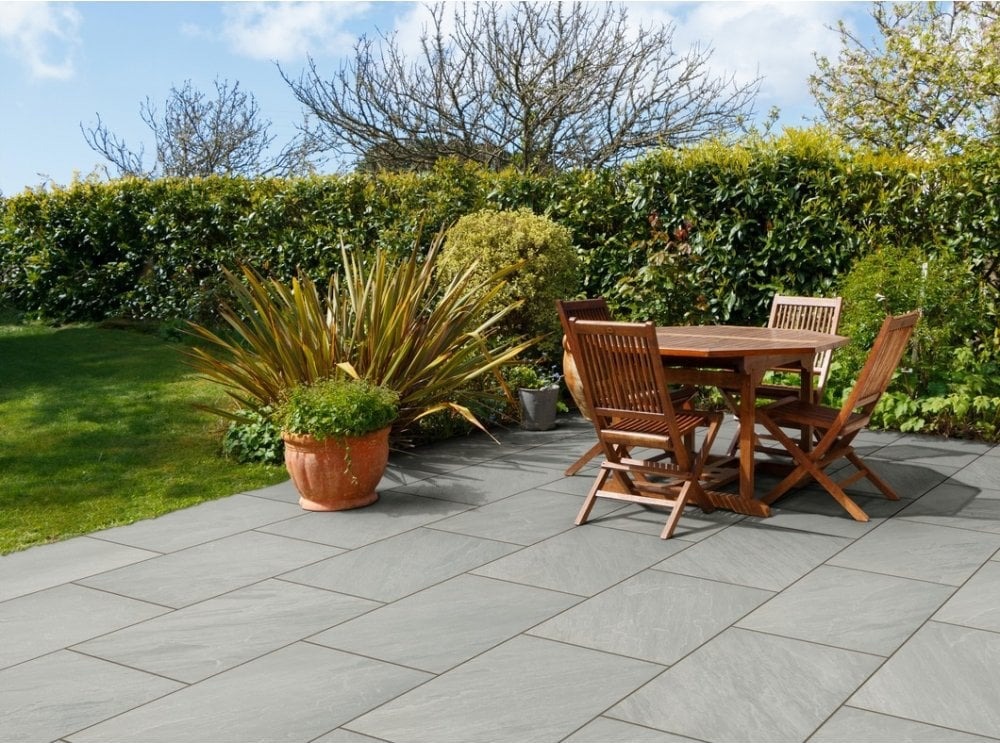
A successful garden project relies on solid ground prep and high-quality materials, whether you are building a composite deck on a slope or laying a clean porcelain patio.
Beatson’s stocks complete lines of timber decking, composite decking, natural stone, and porcelain paving across our branches. Order online for direct delivery to your site, or drop into your local branch to speak with our team about sub-base aggregates, mortar mixes, and fixings for your project.
Read Next
Composite Decking in UK Winters: Slip Ratings & Maintenance
A Beginner’s Guide on How to Build Decking: Step-by-Step Instructions
How to Build a Garden Wall in 7 Easy Steps
Comments are closed here.